

Omnidirectional Array Microphone Modules
Compare microphone arrays for room voice pickup, compact terminals, direction-aware robotics, and raw audio development. Choose between onboard voice processing and multichannel raw capture, then match the array layout, USB connection, and installation space to your device.
Product catalog
Omnidirectional Array Microphone
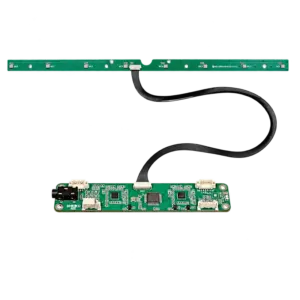
HK-ARRAYMIC-RAW-V1.0
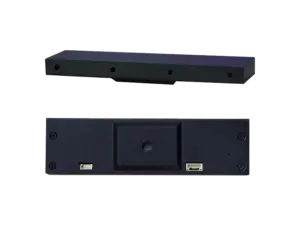
M40
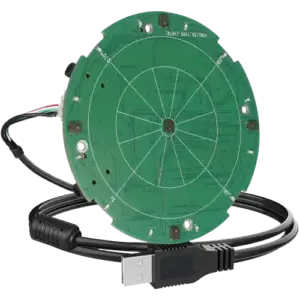
QXMIC-V3.0
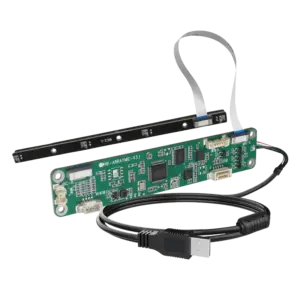
HK-ARRAYMIC-V3.2-4
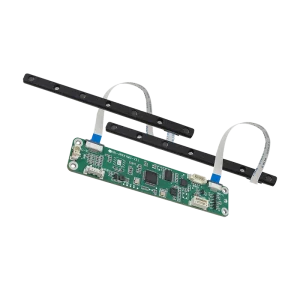
HK-ARRAYMIC-V3.2-8
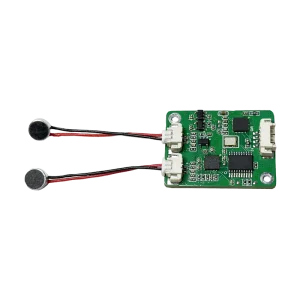
HK-JZMIC-V1.0
Choose by audio workflow
Start with the audio your host needs and the way the microphones will fit into your device.
Displays and meeting systems
Compare the enclosed M40 with V3.2 board sets when you want onboard voice processing for a display or conferencing device.
Compact voice terminals
The JZMIC board combines two analog microphones with noise suppression and automatic gain control in a 30 × 22.5 mm footprint.
Direction-aware interaction
QXMIC adds TTL sound-source direction output and LED direction indication to a circular microphone array.
Raw audio development
Choose RAW-V1.0 when the host will process the eight microphone channels and run the audio algorithms.
Compare omnidirectional microphone arrays
Compare the audio path, processing functions, and integration format. Scroll horizontally to see all features.
| Model | Array / pickup | Pickup distance | Audio capture / output | Processing / direction data | USB connection | Form / dimensions | Application fit |
|---|---|---|---|---|---|---|---|
| HK-ARRAYMIC-RAW-V1.0 | 8-microphone linear array Raw capture for host processing |
Up to 10 m nominal | 8-channel raw audio 16 kHz / 16-bit |
No onboard noise suppression Host runs the audio algorithms |
USB PH 5-pin, 1.25 mm UAC 1.0 |
Linear microphone board set AEC and camera expansion interfaces |
Host-side beamforming, audio research, and robotics development |
| M40 | 4-microphone linear array 360° pickup |
6–10 m nominal | USB voice audio 16 / 48 kHz, 16-bit |
AEC, NS, AGC Beamforming; voice enhancement |
USB audio | Enclosed bar 120 × 33 × 13 mm |
Displays and conferencing devices that need a compact enclosed microphone |
| QXMIC-V3.0 | 5-microphone circular array 360° pickup |
2 m recommended | USB voice audio 48 kHz / 16-bit |
AEC, NS, AGC; voice enhancement TTL DOA output; LED direction indication |
USB 5-pin vertical connector 1.25 mm; UAC 1.0 |
Circular board 77 mm diameter Dual 3 W speaker amplifier support |
Robots and voice terminals that need sound-source direction information |
| HK-ARRAYMIC-V3.2-4 | 4-microphone linear array | 6–10 m nominal | USB voice audio 16 / 48 kHz, 16-bit |
AEC, NS, AGC Beamforming; voice enhancement |
USB GH 5-pin header 1.25 mm |
Embedded board set Main board: 100 × 20 × 5.8 mm |
Embedded displays, conference hardware, and voice-enabled terminals |
| HK-ARRAYMIC-V3.2-8 | 8-microphone linear array | 6–10 m nominal | USB voice audio 16 / 48 kHz, 16-bit |
AEC, NS, AGC Beamforming; voice enhancement |
USB GH 5-pin header 1.25 mm |
Embedded board set Main board: 100 × 20 × 5.8 mm |
Embedded voice systems requiring an eight-microphone array layout |
| HK-JZMIC-V1.0 | 2 analog microphones 360° pickup |
Best within 5 m | USB voice audio 48 kHz / 16-bit |
NS, AGC Voice enhancement |
USB 2.0 UAC 1.0 |
Compact board 30 × 22.5 mm |
Space-constrained voice terminals and compact embedded devices |
AEC: acoustic echo cancellation; NS: noise suppression; AGC: automatic gain control; DOA: direction of arrival. Nominal pickup distances depend on the room, noise, speaking level, and installation. Microphone count and USB output-channel count are separate specifications.
Plan the audio integration
Choose processed voice or raw channels
For onboard processing, compare the functions listed for each model. With RAW-V1.0, the host receives the microphone data and provides the audio processing.
Evaluate the complete audio path
For speaker-equipped devices, plan playback routing and the AEC reference. Evaluate pickup in the intended enclosure and room, including fan noise and speaking positions.
Robotics and AI voice interaction · Video conferencing applications
Need help choosing a model?
Tell us about your application, host system, and installation requirements so we can help you compare models.