

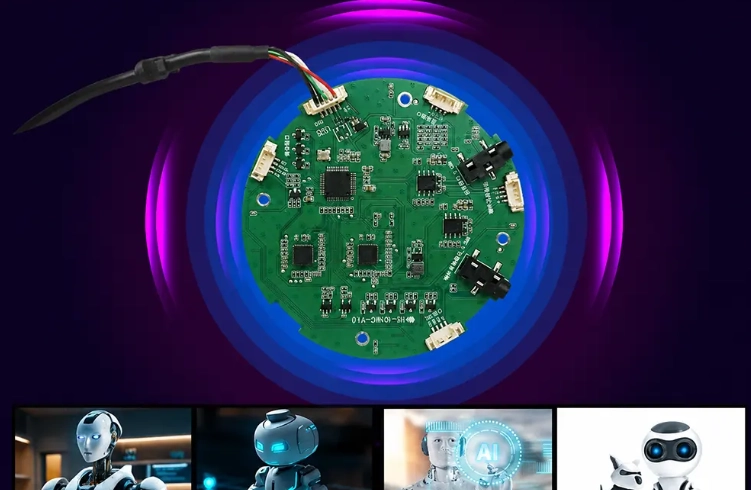
Robot Microphone Array Applications: Voice Interaction, Sound Localization, and Integration
A robot microphone array captures sound through multiple microphones arranged in a defined geometry. With suitable signal processing, it can provide speech input, estimate a speaker’s direction, or improve the audio sent to a speech recognition system.
Its role depends on the application. A reception robot may need to hear visitors approaching from different directions. A humanoid may need directional information to turn toward a speaker. A research platform may need separate microphone channels for developing its own acoustic algorithms.
These tasks require different outputs. Processed USB audio, sound-direction data, and raw multichannel recordings serve different purposes, so the audio architecture should be defined before selecting a module.
What Does a Microphone Array Do in a Robot?
Several functions commonly appear in a robot audio system:
| Function | Purpose in a robot |
|---|---|
| Speech capture | Supplies audio to a wake-word detector, speech recognizer, or communication application |
| Beamforming | Combines microphone signals to emphasize sound from a selected direction |
| Sound source localization | Estimates where a sound originates, often as a direction of arrival |
| Acoustic echo cancellation | Reduces the robot’s own loudspeaker playback in the captured audio |
| Noise suppression | Reduces unwanted noise while attempting to preserve speech |
| Automatic gain control | Adjusts signal level as speaking volume or distance changes |
These capabilities must be checked individually. Omnidirectional pickup describes coverage; it does not establish that a module outputs a speaker’s direction. Likewise, a board containing several microphones may expose only a processed audio stream to the host.
The microphone array also forms one part of the interaction system. Speech recognition, language understanding, dialogue management, and motion control require additional software and processing.
Where Are Robot Microphone Arrays Used?
Service and Reception Robots
Reception, information, and guided-service robots need to capture questions from users who may stand at different heights, distances, and angles.
For a robot operating in an open lobby, broad pickup coverage can help accommodate visitors approaching from several sides. For a stationary robot facing a defined service position, directional pickup may better match the interaction area.
The acoustic challenge changes when the robot begins speaking. Its loudspeaker can feed playback into the microphones, interfering with the visitor’s next question. If users need to interrupt a spoken response, evaluate acoustic echo cancellation and the complete interruption workflow under simultaneous speech.
Useful development tests include a visitor speaking beside the robot, background conversations behind the visitor, and questions asked while the robot is playing a response.
Humanoid Robots and Speaker-Oriented Interaction
A humanoid may use sound-direction information to orient its head or camera toward a person before continuing a conversation.
This application requires a localization output that the robot controller can read. The integration must define the angle reference, direction of increasing angle, update behavior, and treatment of unreliable estimates.
A direction estimate alone does not establish a person’s distance or exact position. It also does not identify which person is speaking when several people occupy the same direction.
Mobile Service and Delivery Robots
A mobile robot can use voice input for destination requests, assistance, or task confirmation. Movement adds a demanding acoustic condition: the robot generates noise while listening.
Wheel motors, cooling fans, gear mechanisms, and vibration transmitted through the enclosure should all be included in testing. A board that captures clear speech on a bench may perform differently after installation near a motor or behind a restrictive grille.
Evaluate the robot while stationary, accelerating, turning, and traveling over representative flooring. If the intended interaction occurs only after the robot stops, define that behavior explicitly and test the transition from movement to listening.
Sound direction can contribute to user interaction, but movement toward a speaker requires separate distance estimation, obstacle perception, and navigation logic.
Telepresence and Remote Collaboration Robots
Telepresence robots must transmit local speech while reproducing remote audio through their speakers.
Here, microphone placement and echo control are closely connected. The loudspeaker location, playback level, enclosure vibration, and acoustic reference path can affect the captured signal.
Broad coverage may suit a robot positioned among several participants. A directional arrangement may suit a robot facing one speaker or a defined work area.
Test simultaneous local and remote speech. A successful one-way recording does not establish that a robot will maintain intelligible conversation when both parties speak at once. Also measure the complete communication delay, including audio buffering, network transport, and playback.
Industrial Human–Robot Interfaces
A microphone array can provide input for routine operator interactions such as requesting status, selecting a workflow, or confirming a noncritical task.
The relevant acoustic environment must be defined precisely. A workstation beside ventilation equipment presents different challenges from an area with impact tools, compressed-air releases, or several nearby operators.
For a fixed operator position, directional pickup is worth evaluating. For workers approaching from different sides, broader coverage and an explicit interaction trigger may be more suitable.
Voice-command performance should be measured using the actual vocabulary, speaker positions, and equipment operating states. Safety-related motion and emergency stopping require a separately validated safety design; ordinary speech capture and recognition do not establish safety performance.
Robotics Research and Education
Universities, laboratories, and robotics developers may need access to individual microphone channels for localization, beamforming, source separation, or noise-processing experiments.
In this setting, an onboard speech-enhancement pipeline can limit access to the acoustic information the researcher wants to study. Raw multichannel output allows the host to apply and compare its own algorithms.
Omnidirectional or Directional Pickup for a Robot?
Choose coverage around the intended interaction area.
Omnidirectional pickup is useful to evaluate when people may speak from around the robot. A circular array with an accessible localization output can also support experiments in speaker-oriented interaction.
Directional pickup is useful to evaluate when the user normally occupies a defined area, such as the front of a reception robot or an operator station. Its benefit depends on the positions and frequency content of both speech and interfering sound.
A robot may need broad listening coverage while waiting for interaction, then more selective processing during a conversation. Supporting this behavior requires suitable hardware and software; it should not be inferred from the microphone count or board shape.
HAOKAI Microphone Modules to Evaluate
We offer modules for processed speech capture, directional interaction, and host-side audio development. The following options address different integration needs.
| Module | Capabilities and technical specifications | Application to evaluate |
|---|---|---|
| HK-QXMIC-V3.0 | Five-microphone circular array; 360° pickup; TTL sound-direction output; AEC, noise suppression, and AGC; 48 kHz/16-bit capture; recommended pickup distance of 2 m | Speaker-oriented interaction and robots needing accessible direction information |
| HK-JZMIC-V1.0 | Two microphones; omnidirectional pickup; USB Audio Class 1.0; voice enhancement, noise suppression, and AGC; 30 × 22.5 mm board; best pickup within 5 m | Compact robot voice input where processed audio is the main requirement |
| HK-DXMIC-V1.1-4 | Four digital MEMS microphones; directional beamforming; AEC, noise suppression, and AGC; USB Audio Class 1.0; optimal pickup within 3 m | Front-facing reception robots and defined operator interaction areas |
| HK-ARRAYMIC-RAW-V1.0 | Eight-microphone linear array; eight-channel raw audio output; 16 kHz/16-bit capture; USB connection; no onboard noise reduction or suppression | Robotics research and custom host-side audio algorithms |
These are candidates for evaluation. Recommended pickup distances do not establish recognition accuracy inside a finished robot.
For HK-QXMIC-V3.0, confirm the TTL protocol, electrical levels, angular reference, and update behavior before connecting direction data to robot control. For HK-ARRAYMIC-RAW-V1.0, verify channel mapping and acquisition timing before building a localization pipeline.
How to Select and Validate a Robot Audio Front End
Define the Required Outputs
Write down what the host needs:
- Processed speech for recognition or communication.
- Direction information for orienting a head or camera.
- Individual microphone channels for custom processing.
- A playback-reference path for host-side echo cancellation.
USB audio support alone does not confirm that all these outputs are available.
Test Inside the Final Enclosure
Install the array with representative microphone openings, protective materials, speakers, and mounting hardware.
Check whether the enclosure obstructs microphones or creates an uneven response around the robot. Include fan airflow and mechanical vibration in the evaluation. Keep the mounting orientation documented so that any direction output can be related to the robot’s coordinate frame.
Measure Performance Against the Application
Use a repeatable test plan with documented speaker positions, noise conditions, robot operating states, and playback levels.
| Requirement | Suggested validation |
|---|---|
| Voice activation | Measure missed activations and false activations with the intended wake word |
| Speech recognition | Measure word error rate or task-command success using representative users |
| Speaker orientation | Compare reported direction with known angles and measure response delay |
| Conversational interruption | Test user speech during robot playback and observe recognition and interruption behavior |
| Mobile operation | Repeat tests during motion and with motors and fans operating |
| Reliable integration | Check channel stability, reconnection, and sustained operation on the target host |
Set acceptance criteria before comparing modules. A reception robot and a research platform can reasonably prioritize different outcomes.
FAQs
What is a robot microphone array?
A robot microphone array is a group of microphones used as an acoustic input system. Depending on its processing and outputs, it can support speech capture, directional filtering, or sound source localization.
Can a microphone array make a robot turn toward a speaker?
It can provide the directional input when localization is supported and accessible. Robot software must interpret that information and control the head, camera, or body. Direction data alone does not provide a complete navigation solution.
How many microphones does a robot need?
There is no universal microphone count. Selection depends on coverage, array geometry, required outputs, processing, mechanical space, and measured performance in the intended environment.
Does 360° pickup mean 360° sound source localization?
No. Pickup coverage and localization are separate capabilities. Confirm that the selected module provides direction data through a documented interface.
Should a robot use processed audio or raw multichannel audio?
Processed audio is useful when the host primarily needs speech input. Raw multichannel audio is useful when developers need to implement or compare their own spatial and speech-processing algorithms.
Which HAOKAI module should a robotics team evaluate first?
HK-QXMIC-V3.0 is a starting point when direction output is required. HK-JZMIC-V1.0 addresses compact processed-audio integration, HK-DXMIC-V1.1-4 addresses directional interaction, and HK-ARRAYMIC-RAW-V1.0 addresses raw multichannel development. Final selection depends on enclosure testing and the required host interfaces.
Define Your Robot’s Audio Requirements
Before choosing a microphone array, specify where users will stand, whether the robot will listen while moving or speaking, and which audio or direction outputs the host needs.
We can use those requirements to narrow the module options and identify the interface and acoustic checks needed for integration. Explore our robotics and AI voice interaction solutions for application planning.
You May Also Like
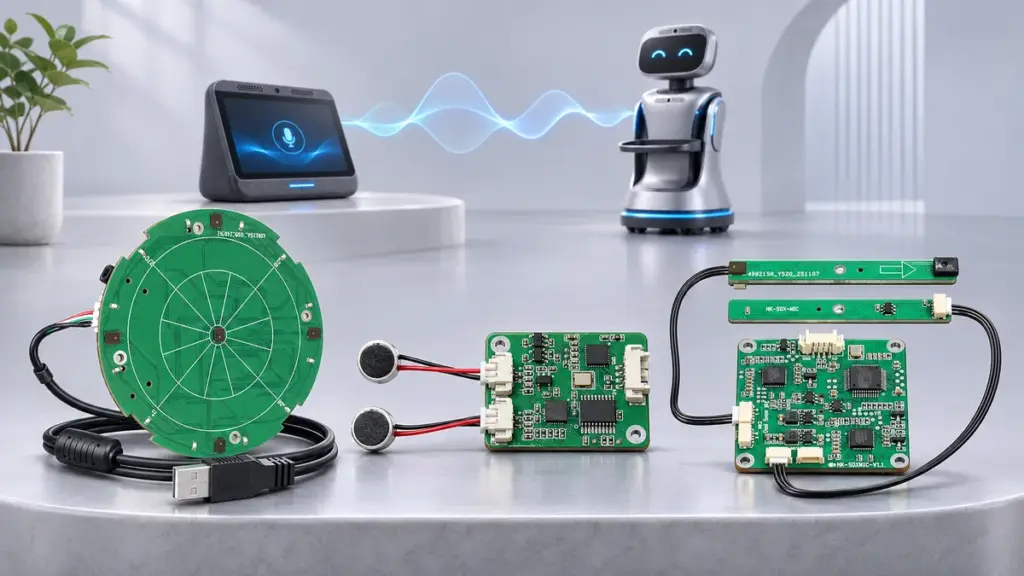
Microphone Array Modules for Smart Devices: Applications and Selection Guide
Compare HAOKAI microphone array modules for smart displays, two-person conversation terminals, and service robots, with practical guidance on pickup patterns...
A directional microphone array for business meeting terminals: HK-SDXMIC-V1.1
Evaluate HK-SDXMIC-V1.1 for two-position business meeting terminals, with practical guidance on pickup layout, audio channel routing, transcription, and prototype testing.
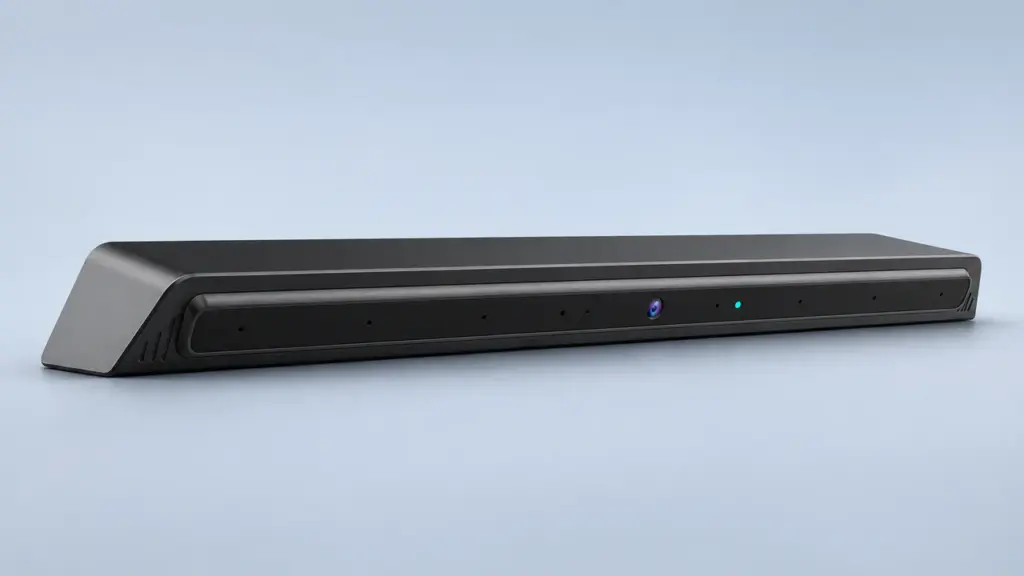
Integrating the HK-M80DC into kiosks and video conferencing devices
How to assess microphone coverage, camera framing, and USB integration when using the HK-M80DC in interactive kiosks and video conferencing...
M20-Single 2-Array Directional Microphone for office calls and meetings
Set up the HAOKAI M20-Single directional USB microphone for desktop calls, presentations, and meetings with a fixed speaking position. Check...